
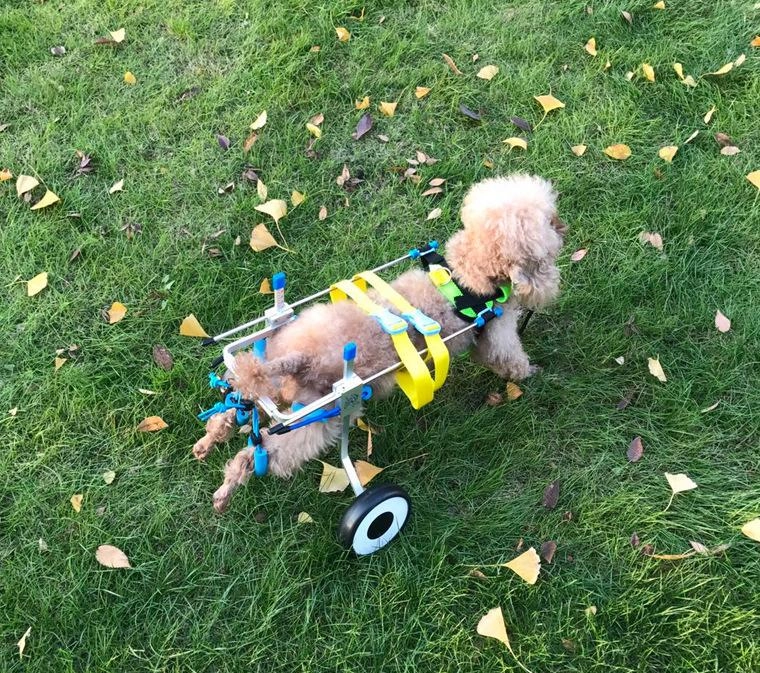
Introduce
On a sunny afternoon, a golden retriever named Buddy, accompanied by his owner, runs happily in the park. Behind this seemingly ordinary scene, however, lies an extraordinary story; Buddy had been paralysed in his hind legs as a result of an accident and had almost lost the ability to walk. But with the help of a non-profit organisation specialising in assistive devices for disabled dogs, Buddy was given a custom-made four-wheeled wheelchair. This wheelchair has not only helped Buddy get back on his feet, but more importantly, it has given Buddy the freedom to run and explore the world again. Buddy's story is a microcosm of the countless disabled dogs who have been given a new lease of life through wheelchairs or mobility aids, and who have demonstrated that, even with physical limitations, the zest and vigour of life can still blossom indefinitely.
Prevalence and Impact of Canine Disability Canine Disability
Whether due to genetic disease (e.g., hip dysplasia), degenerative disease (e.g., arthritis), trauma (e.g., spinal injuries), or geriatric disease, is prevalent. It is estimated that around 10-20 per cent of dogs worldwide will experience some form of disability or health problem during their lifespan, which greatly affects their quality of life. For example, arthritis, one of the most common chronic canine diseases, affects more than 20 per cent of adult dogs, resulting in limited mobility or even the inability to walk. And hip dysplasia, a hereditary bone disorder that affects a wide range of dog breeds and is especially common in large dogs, severely affects their athletic ability and quality of life.
The Value of Wheelchairs and Mobility Devices
In the face of these challenges, it's especially important to provide disabled dogs with the right wheelchair or mobility device. Not only can these devices help dogs regain basic mobility, but more importantly, they can significantly improve their quality of life so they can continue to enjoy walking, playing and exploring the world. Wheelchairs or mobility devices provide disabled dogs with an opportunity to get back on their feet, run around and socialise, reducing complications such as muscle atrophy and bed sores that can arise from prolonged bed rest or lack of exercise. In addition, these devices promote an emotional connection between dogs and their owners, enhancing their mental health and enabling them to feel loved and valued.
Types and Technologies of Adjustable Wheelchairs and Mobility Scooters
Design Principles: Wheelchairs and Mobility Scooters to Accommodate Diverse Needs.
The design principles of adjustable wheelchairs and mobility scooters are critical in helping dogs with disabilities regain their freedom and vitality on the road. These devices are not only varied, but also unique and designed to accommodate dogs of different sizes, weights and types of disabilities.
- Four-wheeled wheelchairs: these wheelchairs are designed to be stable and suitable for most dogs with disabilities. The four-wheeled design provides good balance and support, allowing the dog to easily walk on flat or slightly uneven surfaces.
- Three-wheeled wheelchairs: three-wheeled wheelchairs are usually lighter and easier to carry and move around. They usually have one front wheel and two rear wheels, with the front wheel responsible for steering and the rear wheel providing support. This design is suitable for smaller dogs or those who need more dexterity.
- Front Wheel Suspension Wheelchairs: These wheelchairs have a suspension system on the front wheels to better absorb ground vibrations and provide a smoother ride. This is especially important for dogs with spinal injuries or joint problems.
Each wheelchair is equipped with adjustable components such as seat height, footrest position and wheelbase to ensure it can be adapted to different dog sizes and disabilities.
Technological innovations: Enhancing comfort and durability
The use of the latest material science, biomechanical design and adjustability technologies makes adjustable wheelchairs and mobility scooters more comfortable, durable and easier to manoeuvre.
- Material Science: Modern wheelchairs and mobility scooters are made from lightweight yet strong materials such as carbon fibre and aluminium alloys, which not only reduce the weight of the equipment but also increase its durability.
- Biomechanical design: Through biomechanical analysis, designers are able to more accurately mimic a dog's natural gait, resulting in wheelchairs and mobility scooters that are more compatible with a dog's body structure. This design not only improves the comfort of the dog, but also reduces fatigue and discomfort during exercise.
- Adjustability technology: Modern wheelchairs and mobility scooters are equipped with a variety of adjustable components, such as seat angle, armrest height and footrest position, which can be fine-tuned to the specific needs of the dog to ensure optimal comfort and functionality.
How to Choose Wheelchair for Dog?
- Dog Size and Dimensions
Before buying a wheelchair, make sure you accurately measure your dog's weight, height, and the length of the front and back legs, among other key dimensions. - Material and quality
Prefer lightweight and sturdy materials such as aluminium alloy, which is both lightweight and durable and will ease the burden on your dog. - Comfort and Adaptability
Prefer a wheelchair that is adjustable in height, width and length so that it can be adjusted as your dog grows or changes in size to ensure optimum support and comfort at all times.
Adjustable wheelchairs and mobility scooters not only bring substantial help to dogs with disabilities, but also build an invisible bridge connecting humans and animals, understanding and acceptance. The popularity and application of these assistive devices have significantly increased the attention and awareness of society towards dogs with disabilities. A dog's disability does not mean the end of life, but a new beginning that requires more care and support. Here, I sincerely invite every reader to pass on this love and hope. Share this article so that more people can understand the needs of dogs with disabilities and raise public concern and awareness about this group. Furvorite also has a range of products on disabled wheelchairs for dogs, please contact us if you need more information.
0 Comments