
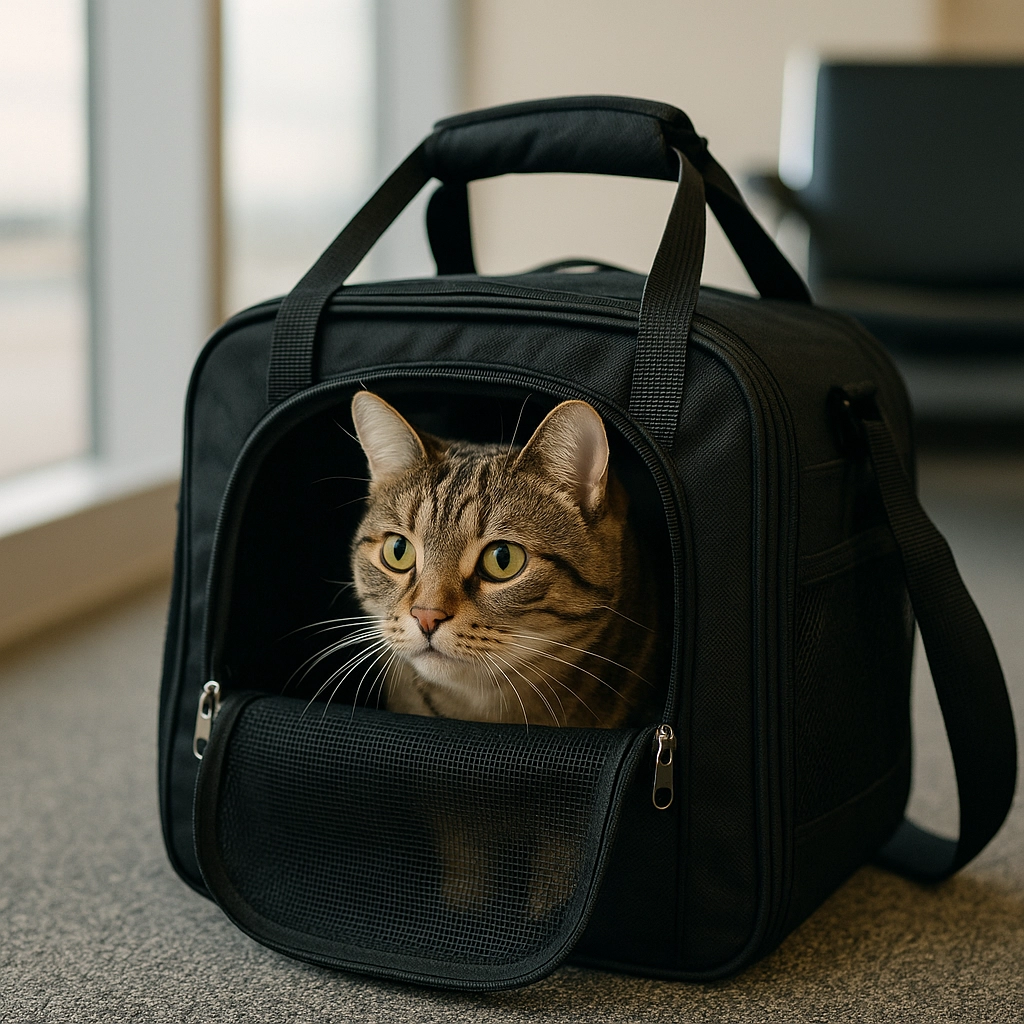
✈️ When Cats Take Flight: A New Blueprint for Airline-Approved Cat Carriers
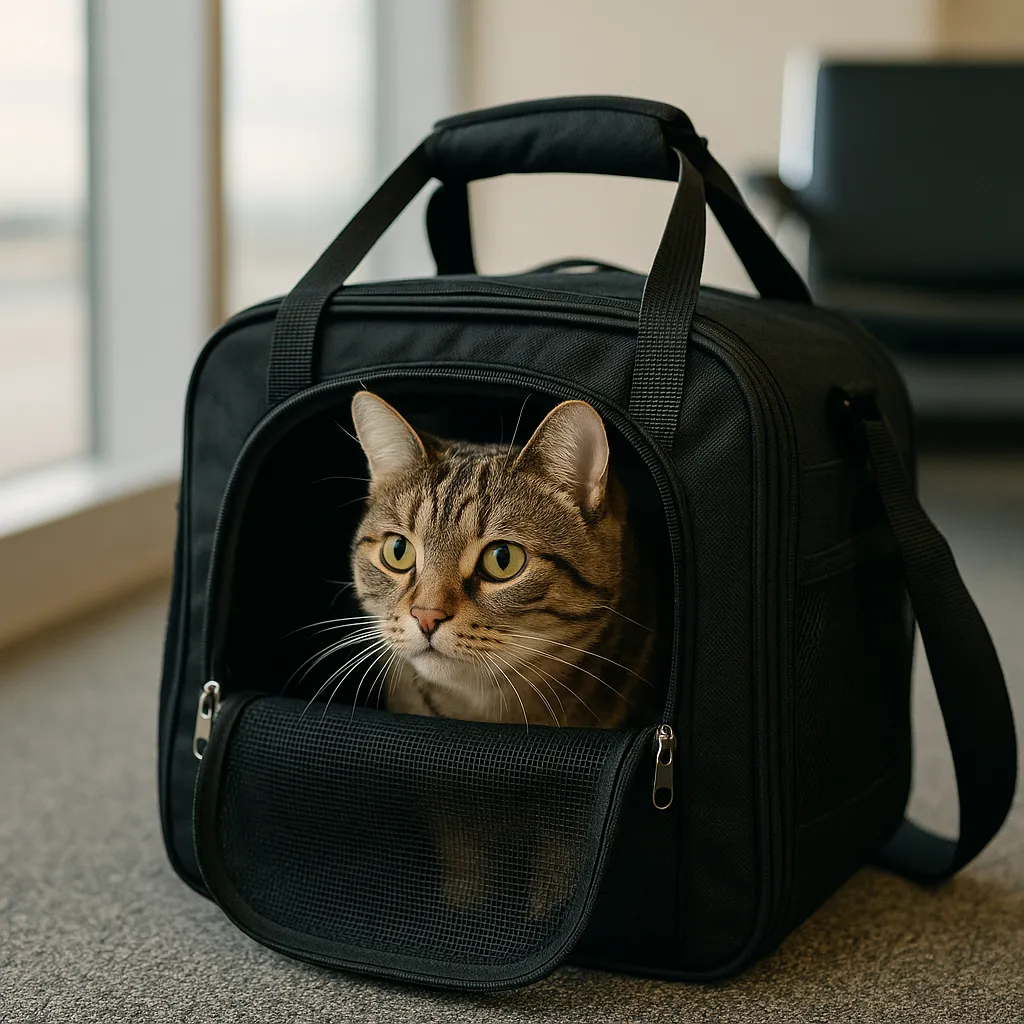
Air travel with pets used to be an afterthought—an improvised combination of borrowed crates, last-minute measurements, and vague airline guidelines buried somewhere on a website no one could find twice. Today, the story looks very different. Pet travel has matured into a refined industry, where safety engineering, comfort psychology, and interior ergonomics intersect. And at the center of this transformation are airline-approved cat carriers—a product category undergoing rapid evolution as global travel becomes more pet-inclusive.
But the new generation of carriers is not merely compliant; it is intentional—a fusion of mobility science, behavioral understanding, and meticulous craftsmanship. Whether a brand sells cat airline approved carriers, collaborates with OEM manufacturers, or distributes bulk approved cat carriers for airlines, the landscape has shifted from functional necessity to engineered experience.
This article does not follow a predictable structure. Instead, it moves through the journey of feline air travel—starting from the unseen constraints that shape product development, moving through the psychological needs of cats in transit, and ending in the business implications for suppliers and global brands.
Let’s begin where every successful design begins—not with the product, but with the problem.
◆ I. The Unseen Rules: Why Airline Approval Is Not as Simple as It Sounds
Airline compliance looks straightforward on paper—dimension limits, ventilation requirements, waterproof bottoms, secure closures. But these standards differ between carriers, regions, and aircraft types. A carrier that fits under the seat of a Boeing 737 may not fit beneath the seat of an A320. A pet parent doesn’t know this. A manufacturer must know this.
1. The Geometry of Under-Seat Space
Manufacturers engineer products around three variables:
-
Seat structure
-
Floor incline
-
Support rails
A difference of 1–2 cm can disqualify a carrier. This is why premium suppliers now develop “adaptive frame” carriers—soft-sided structures that compress safely without collapsing onto the cat.
2. Ventilation as a Measurable Value, Not an Aesthetic Choice
Airflow is no longer “mesh wherever possible.” It is:
-
Tri-direction ventilation for oxygen flow
-
Correct mesh tension to avoid tearing
-
Heat dispersion models tested in enclosed cabin environments
The design is technical, not decorative.
3. Safety Through Redundancy
A latch must fail twice before a cat escapes. Zippers must lock. Panels must resist claw pressure. Airline approval is not minimal compliance—it is engineered resilience.
◆ II. What Cats Actually Experience in Air Travel—And Why Design Must Change
Cats do not understand airports. They understand sound, vibration, scent, temperature, and spatial boundaries. A compliant carrier may still be a stressful one. The best carriers bridge the gap between approval and comfort.
1. Territory Inside a Box
To a cat, a carrier is temporary territory. The interior must offer:
-
Soft but supportive padding
-
A scent-neutral, non-plastic smell
-
A den-like atmosphere that reduces stimulation
This is why high-end carriers use muted interior colors rather than bright fabrics.
2. The Vibration Factor
Airports vibrate—conveyor belts, rolling carts, escalators. These vibrations transmit through the carrier floor. Manufacturers now use:
-
EVA foam dampening
-
Shock-absorbing base supports
-
Dual-layer padding
The goal: mimic stable ground in an unstable environment.
3. Predictable Visibility
Some cats prefer full view. Others panic. The future lies in adjustable visibility:
-
Roll-down privacy panels
-
Variable-tint mesh
-
Removable interior curtains
Flexibility is now part of comfort.
◆ III. The Carrier as a Travel Ecosystem: Beyond Fabric and Zippers
The modern airline-approved cat carrier is no longer a single product—it is a system. Manufacturers and B2B buyers are designing kits, accessories, and integrated solutions.
1. Modular Travel Add-Ons
Premium suppliers now offer:
-
Carrier-to-seatbelt converters
-
Clip-in travel bowls
-
Removable comfort pods
-
Storage for documents and treats
These elevate carriers from containers to travel hubs.
2. Smart Features on the Horizon
The pet travel category is quietly merging with consumer tech:
-
Temperature sensors
-
CO₂ alert monitors
-
Motion-activated calming lights
-
App-based travel history logs
The next competitive edge lies in intelligent safety.
3. Sustainability as a Core Buying Standard
Airlines themselves are pushing sustainability. This influences supplier expectations:
-
Recycled PET fabrics
-
Low-impact dyes
-
Bio-based padding
-
Recyclable hardware components
Brands that embrace eco-forward design win major retail accounts.
◆ IV. The B2B Viewpoint: What Buyers Should Demand—and What Suppliers Must Deliver
Behind every successful retail or private-label carrier is a manufacturer capable of meeting complex requirements.
1. Precision Engineering and Prototype Testing
Factories now run simulations to test:
-
Cabin airflow
-
Under-seat deformation
-
Claw-force impact resistance
-
Zipper stress tests
Approval begins long before certification.
2. OEM/ODM Customization Capabilities
Top suppliers support:
-
Brand-exclusive dimensions
-
Custom fabrics & trims
-
Airline-specific compliance builds
-
Private labeling at scale
This is where design becomes differentiation.
3. Wholesale Efficiency Without Quality Drift
For large orders of wholesale cat carriers, consistency matters more than innovation. Retailers expect:
-
Identical measurements
-
Tight stitching uniformity
-
Zipper reliability
-
Zero mesh variance
Quality control is the true backbone of B2B success.
◆ V. Looking Forward: The Carrier of the Future
Imagine a carrier that anticipates turbulence and stabilizes itself. One that communicates temperature changes. One that folds into a home den after the flight. These are not far-off ideas—they are early-stage prototypes already circulating in the OEM world.
The future of airline-approved cat carriers involves:
-
Hybrid hard/soft structures
-
AI-assisted comfort analysis
-
Custom-fit interior modules
-
Global airline-standard harmonization
-
Fashion-forward collaborations
The next era is not about making carriers compliant—it is about making them intelligent, adaptable, and emotionally considerate.
0 Comments