

🐕🦺 Title: Rethinking Canine Mobility: The New Science and Design Philosophy Behind Elbow Support for Dogs
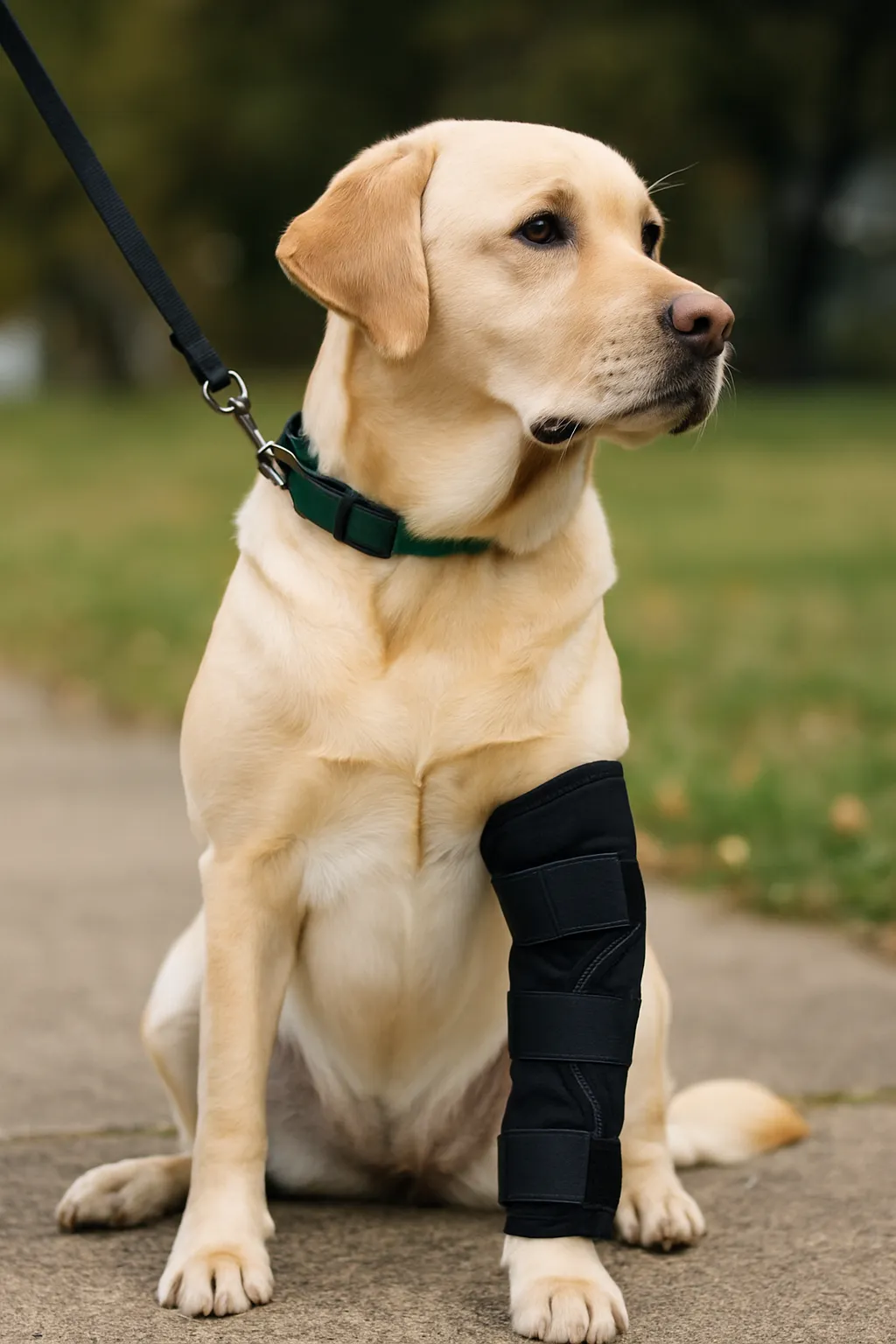
There is a moment every dog owner recognizes—subtle at first, then unmistakable. A slight hesitation before jumping onto the couch… a slower climb up the stairs… a soft shifting of weight away from a painful limb. These small signals form the beginning of a much larger story: the story of a dog adapting to front-leg discomfort.
As canine mobility science evolves, so does the technology behind elbow support for dogs. What began as a niche rehabilitative tool is now a comprehensive product category used by veterinarians, rehab specialists, and proactive pet parents around the world. Whether the need is a dog front elbow brace, long-term arthritis care, or even integration with modern accessories—like brands that source mobility gear alongside custom dog leashes wholesale—one thing is clear: elbow support has become an essential part of canine wellness.
This isn’t another “problem–solution–benefits” article. Instead, we’ll explore elbow support through a layered narrative: the biomechanics behind canine elbow strain, the emotional reality of dogs experiencing discomfort, the engineering evolution of braces, and finally, how the pet industry is redefining mobility products through customization and high-performance manufacturing.
◆ I. The Silent Language of Pain: Understanding What Dogs Can’t Say
Dogs don’t complain. They adjust. They compensate. They endure. And because of this, elbow issues often go unnoticed until mobility is significantly compromised.
1. How Dogs Hide Early Signs of Elbow Pain
Instinct tells dogs not to show weakness. So they adapt by:
-
Reducing stride length
-
Shifting weight to other limbs
-
Slowing down play
-
Avoiding impact activities
-
Gently rotating elbows outward for relief
A subtle change in behavior is often the clearest warning sign.
2. The Emotional Impact of Chronic Discomfort
Pain does more than hinder movement—it alters personality.
A once-playful dog may seem withdrawn. An energetic companion becomes hesitant. A confident walker suddenly pauses at curbs. Emotional fatigue is often as significant as physical strain.
3. Why Early Intervention Matters
By the time limping appears, joint degeneration has usually progressed. Proper support—like a dog front elbow brace—can slow deterioration, stabilize movement, and reduce long-term arthritis risk.
◆ II. What the Elbow Really Does: A Biomechanical Story
To understand elbow support technology, we must first understand the elbow itself.
1. A Complex Joint Under Heavy Pressure
The canine elbow connects three bones and absorbs significant load during:
-
Jumping
-
Braking
-
Pivoting
-
Digging
-
Descending stairs
This makes it one of the most stress-prone joints in a dog’s body.
2. When Alignment Fails
Common elbow conditions include:
-
Dysplasia
-
Osteoarthritis
-
Ligament strain
-
Cartilage erosion
-
Luxation
All of these conditions require stabilization—a task best addressed with targeted support.
3. Why Bracing Helps
A brace works by:
-
Reducing lateral movement
-
Supporting joint alignment
-
Increasing circulation through warmth
-
Minimizing impact shock
-
Boosting proprioception (body awareness)
Dogs immediately gain stability and confidence.
◆ III. The Dog’s Journey With a Brace: Relief, Recovery, and Renewal
A brace changes more than movement—it changes a dog’s relationship with its own body.
1. The First Wearing: Curiosity and Adjustment
Most dogs respond with curiosity, not discomfort. A well-designed brace:
-
Doesn’t pinch
-
Doesn’t sag
-
Doesn’t slip
-
Doesn’t restrict walking
Good engineering means near-invisible integration into daily life.
2. The Cycle of Confidence
As support eases pressure, dogs:
-
Walk farther
-
Resume normal posture
-
Regain coordination
-
Rebuild muscles lost due to compensation
Confidence often returns faster than physical function.
3. Long-Term Improvements
Consistent bracing leads to:
-
Reduced inflammation
-
Slower arthritis progression
-
Higher activity levels
-
Better weight management
-
Improved mental wellbeing
A brace restores more than mobility—it restores joy.
◆ IV. Behind the Brace: Engineering Modern Elbow Support Technologies
Support devices today look simple, but they are anything but simple behind the scenes.
1. Anatomical Contouring
A modern elbow support for dogs uses 3D patterning to match the natural angle of the limb. Key factors include:
-
Curved stabilizers
-
Dual-strap anchoring
-
Adjustable compression zones
-
Anti-slip inner lining
Precision patternwork prevents slippage and discomfort.
2. Fabric as Technology
Today’s orthopedic materials offer:
-
Breathable neoprene
-
Anti-chafe interior fabric
-
Lightweight thermal padding
-
Stretch zones for controlled movement
-
Skin-safe elastic straps
Fabrics no longer just “wrap”—they interact with anatomy.
3. Reinforced Stress Mapping
Manufacturers now analyze the dog’s movement under pressure. This informs:
-
Stitch strength
-
Panel layering
-
Support angle accuracy
-
Durability under repeated use
It's mobility engineering—not merely product sewing.
4. Customizable Fit for Unique Needs
Just as brands purchase custom dog leashes wholesale to express identity, the brace industry is following customization trends:
-
Breed-specific patterns
-
Left/right elbow versions
-
Adjustable stabilization pads
-
Personalized sizes for unique body shapes
The future is tailor-made mobility.
◆ V. Manufacturers as Innovators: The New Standards in Canine Mobility Production
Factories creating elbow support are no longer “pet product manufacturers”—they’re orthopedic partners.
1. Vet-Informed Design Pipelines
Leading factories collaborate with:
-
Veterinary orthopedic surgeons
-
Canine physiotherapists
-
Mobility specialists
This results in medically sound support devices.
2. Scalability Without Compromise
When producing for global brands, factories must maintain:
-
Uniform fabric elasticity
-
Identical compression across batches
-
Reinforced stitching accuracy
-
Reliable adhesion of support pads
Scaling must not dilute quality.
3. Integrated Accessory Ecosystems
The best mobility lines now integrate:
-
Matching harnesses
-
Supportive recovery pads
-
Warmth therapy modules
A brace becomes one part of a coordinated recovery experience.
◆ VI. Looking Ahead: The Future of Canine Mobility Support
Elbow support technology will soon resemble human orthopedic innovation.
What’s Coming:
-
Heat-regulating smart braces
-
Motion sensors that map recovery progress
-
Stiffness detection through micro-vibration
-
Veterinary app integration
-
Fully 3D-printed elbow shells
Tomorrow’s elbow brace will be intelligent, adaptive, and personalized.
0 Comments