
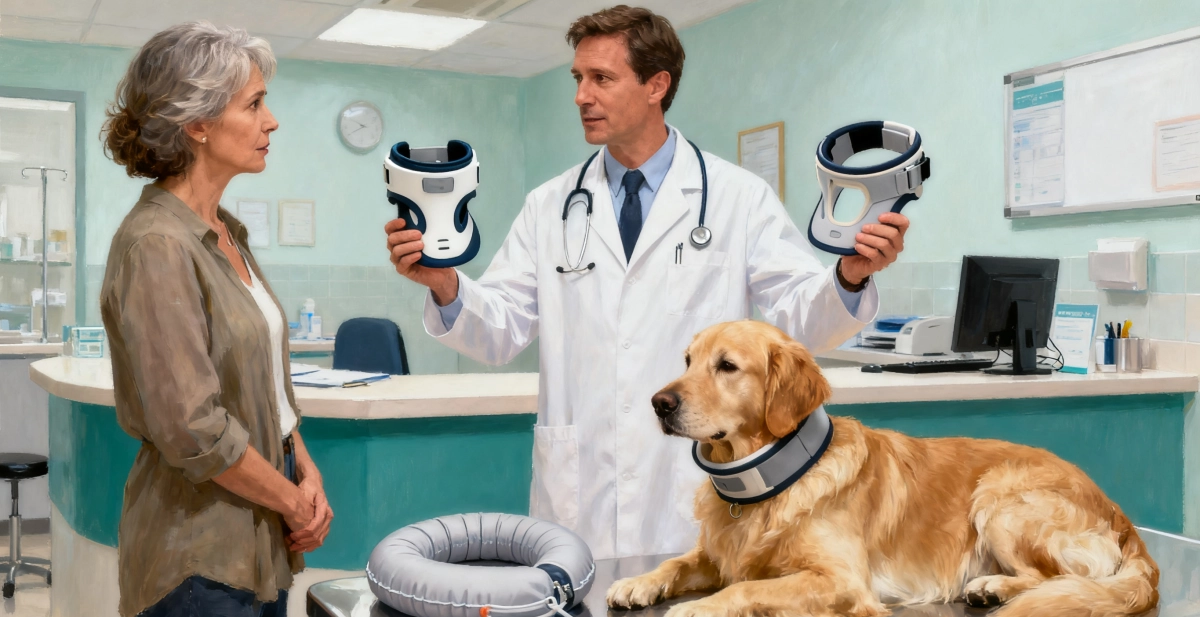
Introduction: Why Dog Neck Support Matters
Neck injuries in dogs are more common than many owners realize. Whether caused by an accident, a fall, or a degenerative condition such as a herniated disc, neck problems can severely impact a dog’s quality of life. Pain, limited mobility, and nerve issues are often the result. Fortunately, modern veterinary products like the dog neck brace have revolutionized how we manage canine neck injuries. These devices provide gentle stabilization, relieve pain, and support proper healing—making them a valuable tool for both veterinarians and caring pet owners.
For businesses that sell pet health products, understanding the benefits and uses of neck braces is essential. This article explores what a neck brace for dogs is, how it works, and how to select the right one for different cases—including those with more severe issues like a neck brace for dog with herniated disc.
What Is a Dog Neck Brace and How Does It Work?
A dog neck brace is a medical support device designed to limit the movement of a dog’s neck and cervical spine. By stabilizing the neck, it allows injuries to heal while reducing the strain on surrounding muscles and nerves.
Modern designs are lightweight, adjustable, and made from soft but supportive materials. Unlike the rigid “cones” used to prevent licking, these braces are focused on orthopedic support. They typically use padded foam or breathable mesh with Velcro straps for easy adjustment.
For dogs recovering from surgery or injury, a neck brace can:
-
Reduce pain by immobilizing the affected area
-
Prevent further damage caused by sudden movement
-
Support natural posture, making daily activities more comfortable
-
Improve recovery outcomes when combined with vet-prescribed medication and physical therapy
B2B buyers—such as veterinary clinics, rehabilitation centers, and pet supply retailers—look for high-quality braces that are easy to size, clean, and ship. These features make a product more appealing to professionals who need reliable solutions for their clients.
Key Considerations When Choosing a Neck Brace
Not every neck brace is suitable for every dog. The right choice depends on the size of the animal, the severity of the injury, and the intended use. Here are the most important factors to consider:
-
Size and Adjustability
Dogs come in all shapes and sizes, so a one-size-fits-all solution rarely works. Good neck braces offer multiple sizes or adjustable straps to ensure a snug but comfortable fit. A loose brace will not provide sufficient stabilization, while one that is too tight can restrict breathing and cause discomfort. -
Material Quality
Look for breathable, hypoallergenic materials that won’t irritate the dog’s skin. Lightweight foam or mesh is often ideal, as it keeps the dog cool and comfortable during extended wear. -
Ease of Use
For both pet owners and veterinary staff, easy application is key. Braces that can be put on and taken off quickly save time and reduce stress for the dog. -
Purpose of Use
Some braces are designed for mild sprains, while others are built to support post-surgical recovery. A neck brace for dog with herniated disc must provide more rigid stabilization than one for a simple muscle strain. B2B suppliers should clearly specify product use cases to avoid confusion. -
Durability and Cleaning
Since braces may be worn for several weeks, they need to withstand daily use. Machine-washable covers or wipe-clean surfaces are highly valued by both clinics and pet owners.
Practical Tips for Pet Owners and Clinics
For pet owners, it’s critical to work with a veterinarian to ensure the neck brace is correctly fitted. A poorly fitted brace may delay healing or even worsen the injury.
For veterinary clinics and distributors, offering fitting guides, video tutorials, and after-sales support can dramatically increase customer satisfaction and reduce return rates. Clinics often buy braces in bulk for resale, so providing size charts and sample units can help them find the right inventory mix.
Another growing trend is combining neck braces with rehabilitation programs. For example, physiotherapy sessions combined with brace support can improve recovery times. B2B sellers may consider offering bundle packages that include educational materials for clinics.
Why a Good Neck Brace Benefits B2B Buyers
Selling neck braces isn’t just about providing a product—it’s about solving a pain point for customers. Clinics and online retailers benefit when they stock braces that are:
-
Clinically reliable – designed with input from veterinary professionals
-
Easy to ship – lightweight and compact for reduced logistics cost
-
High quality – durable, comfortable, and less likely to be returned
-
Well-documented – supported by usage guides and marketing materials
For B2B partners, this means fewer complaints, better customer loyalty, and a product line that stands out in a competitive pet-health market.
Final Thoughts
The right dog neck brace can make a significant difference in a pet’s recovery journey. For B2B buyers—whether you run a veterinary practice, an e-commerce store, or a rehabilitation center—offering high-quality neck braces adds value to your catalog and builds trust with your clients.
As pet owners continue to seek effective solutions for orthopedic problems, the demand for reliable and well-designed neck braces will only grow. Now is the perfect time for businesses to invest in this niche market and meet the rising needs of concerned pet parents.
0 Comments