
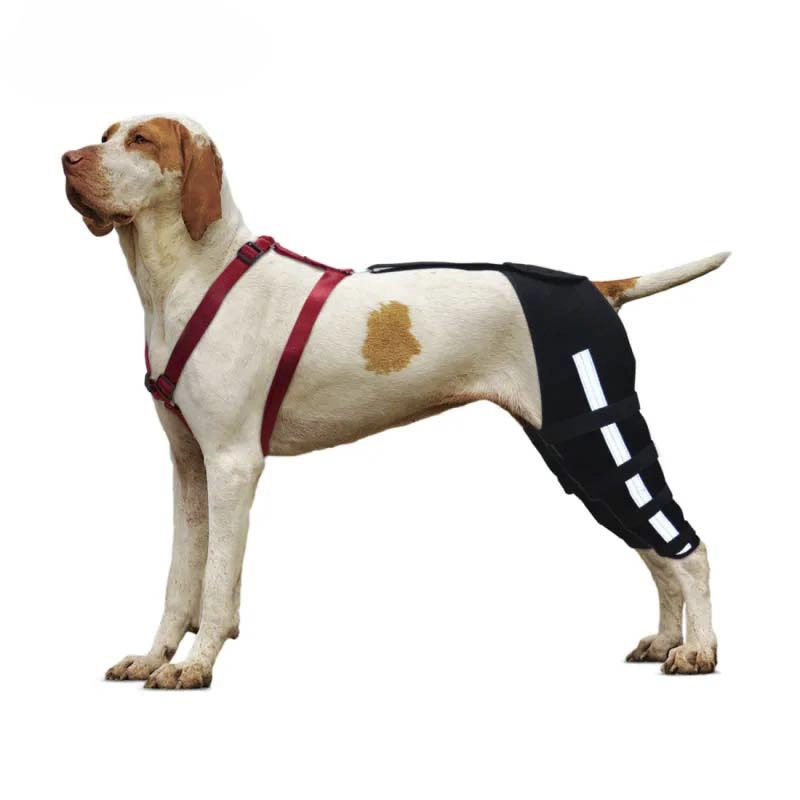
When your dog is suffering from a torn cruciate ligament, as an owner, you may feel helpless. However, with the development of veterinary technology and assistive devices, dog leg braces have become an effective non-invasive solution to help dogs regain mobility in situations where surgery or post-operative rehabilitation is not suitable. This article will give you an in-depth understanding of how leg braces work, their benefits, and how to choose and use them to help your pet regain health and vitality.
The Challenges of dog torn cruciate ligaments: Why Dog Braces?
Torn cruciate ligaments can be a painful and limiting injury for dogs. This injury mainly affects the knee joint of dogs and is common in large, active breeds, but small and medium-sized dogs can also develop the disease due to trauma or obesity. Once the cruciate ligament is torn, the dog may experience the following serious effects:
- Severe pain: Tearing can cause instability in the knee joint, and each step can be painful for your dog.
- Limping and limited movement: Most dogs will refuse to use the injured leg for weight bearing, severely limiting daily activities.
- Long-term impact on joint health: Untreated tears can lead to osteoarthritis and permanent joint damage.
The advent of dog leg braces has brought hope to those dogs that cannot be operated on. It can not only relieve pain, but also provide stable support for joint recovery, becoming an important tool in the rehabilitation process.
How do leg braces support your dog's recovery?
The core function of dog leg braces is to help reduce pain and restore movement through physical support and stability. Here's how it works:
- Stabilize knee joint:
A dog's knee joint is prone to abnormal movement after a cruciate ligament tear, and the brace provides external support to the knee joint by limiting the range of motion of the joint and avoiding further injury. - To reduce ligament pressure:
When the dog walks or runs, the brace shares the load on the ligaments and joints, which reduces the sense of pain and reduces the likelihood of a second tear. - Promotes muscle and soft tissue healing:
Under the protection of the brace, the dog can gradually regain the use of the injured leg, thereby avoiding muscle atrophy while helping the soft tissue to readjust to normal activities. - Improve overall mobility:
The brace allows the dog to maintain a moderate level of activity during the rehabilitation process, thereby improving his mental state and avoiding behavioral problems caused by prolonged restriction of activity.
Advantages of dog leg braces
- High safety: No need for anesthesia or surgery, suitable for older or frail dogs.
- Quick results: Improve your dog's mobility immediately after use.
- Affordable: Stents cost less than complex surgical treatments and are suitable for owners with limited budgets.
- Easy to use: Most stands are simple in design and can be easily worn and adjusted into place.
How to choose the right brace for your dog?
- Material and comfort
High-quality scaffolds are usually made of lightweight, breathable materials, such as nylon or medical silicone, which can reduce discomfort during wearing. At the same time, non-toxic materials should be selected to ensure safety. - Personalized customization
Every dog is different in size and joint status. Custom brackets can better fit your dog's leg structure and provide more precise support. - Functional design
Choose braces based on your dog's mobility needs: Some braces focus on limiting movement to protect the joints, while others are designed to allow greater flexibility and are suitable for dogs that gradually return to movement. - Veterinary advice
Before buying or using a brace, always consult a veterinarian who can provide professional advice on the most appropriate type of brace for your dog's specific injury.
Precautions for the correct use of the bracket
- Gradually adapt to:
Your dog may not be used to it at first. You can gradually extend the time by wearing it for a short period of time, and give a reward to enhance the dog's acceptance. - Regular inspection:
Check the brace regularly for wear or displacement, and watch your dog's skin for signs of redness or pressure. - Combined with rehabilitation training:
Braces are an important tool for rehabilitation, but combined with proper physical therapy and low-impact exercise, they can be more effective in helping your dog regain joint function. - Monitor your dog's status:
If your dog behaves differently or has increased pain after wearing the brace, stop using it immediately and consult a veterinarian.
Leg braces vs. Surgery: How to choose?
Dog Leg braces and surgery are not opposites, but can complement each other:
- Surgery is suitable for: Young, healthy dogs and severe lacerations.
- Stents are suitable for: Dogs that are older, frail or unfit for surgery, or as a post-operative protective measure.
Whichever option is chosen, the dog's overall health and quality of life should be a priority.
Write at the end
Dog Leg braces not only offer hope of recovery for dogs with torn cruciate ligaments, but also offer an affordable and safe treatment option for their owners. With the right use and good care, many dogs can get back to enjoying running and jumping with the help of a brace.
If your dog is facing similar issues, talk to your veterinarian to find out if a leg brace is the best option for him. To choose the right treatment for your pet is to give them the best care!
Contact us
If you have more questions about pet rehabilitation equipment, please feel free to contact us, our team will provide you with the most professional advice!
Furvorite is a pet products manufacturer, we have a range of pet products, such as: dog travel tunnel bag, dog knee braces and dog harnesses and so on, we can provide a one-stop customised service for your pets, if you are interested in these products or would like to enquire more about our dog knee braces please send us a message.
0 Comments